
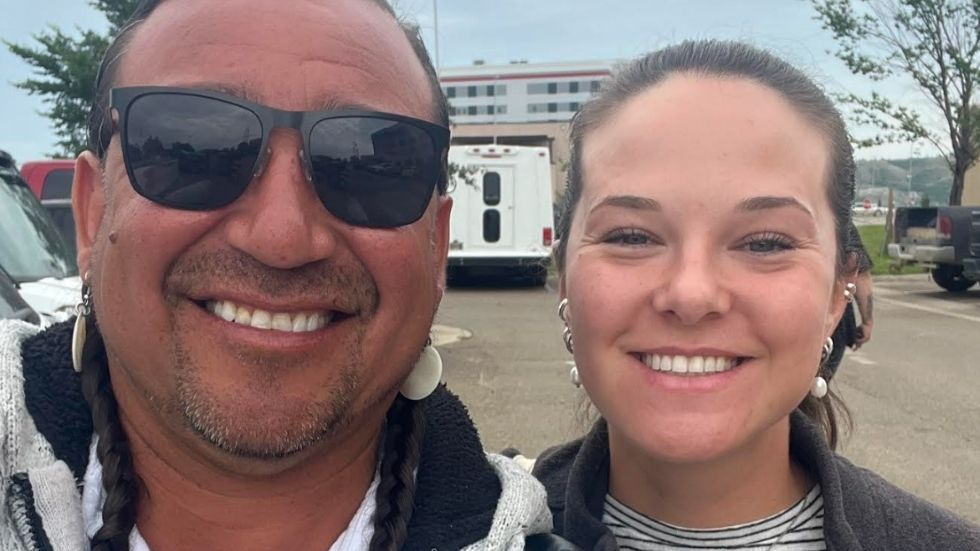
In this spotlight, Ph.D. Candidate Rachel Thimmig shares how her tribal collaborators invited her to a Sundance in North Dakota this summer.
Rachel, who will be starting her seventh and final year this fall, has been busy working on her dissertation this summer. Last year, she conducted her “fieldwork,” visiting different archaeological and archival collections repositories in both D.C. and North Dakota, including the Smithsonian’s National Museum of Natural History and National Anthropological Archives as well as the North Dakota State Historical Society’s State Archives and Archaeological Collections. This year, she has focused on writing, but an opportunity arose to visit North Dakota in July, and she went to update her tribal collaborators.
Rachel’s dissertation is a collections-based reanalysis of archaeological materials that explores changes in domestic space and how the Mandan, Hidatsa, and Arikara (MHA) Nation adapted to U.S. settler colonialism during the mid-to-late nineteenth century. Most of the collections came from salvage excavations conducted before the construction of the Garrison Dam in the mid-twentieth century. She has ongoing permission to reexamine, photograph, and write about the objects from the MHA’s Tribal Historic Preservation Office (THPO), and through tribal consultation, has established a strong friendship with Allen Demaray, the MHA Tribal Historic Preservation Officer, and Grant Baril, the NAGPRA Coordinator.
This July, Allen and Grant invited Rachel to attend a Sundance on the Fort Berthold Indian Reservation outside of Mandaree. She attended two of the four days of proceedings and watched Allen, along with many other MHA tribal members, worship and pray. The Sundance is a sacred religious ceremony that serves as a form of prayer and renewal for the community. It was an incredible opportunity to see MHA and Plains culture alive and thriving, and Rachel even offered her own small flesh sacrifice and prayers to hang from the central sacred cottonwood tree. After the Sundance, she updated the THPO on her dissertation’s progress and received tribal feedback on her interpretations.